
How to choose the route
The route is determined based on the geometry and weight of the part. Series profiles and plates move faster on the automatic line.
Steel blasting with automatic line-
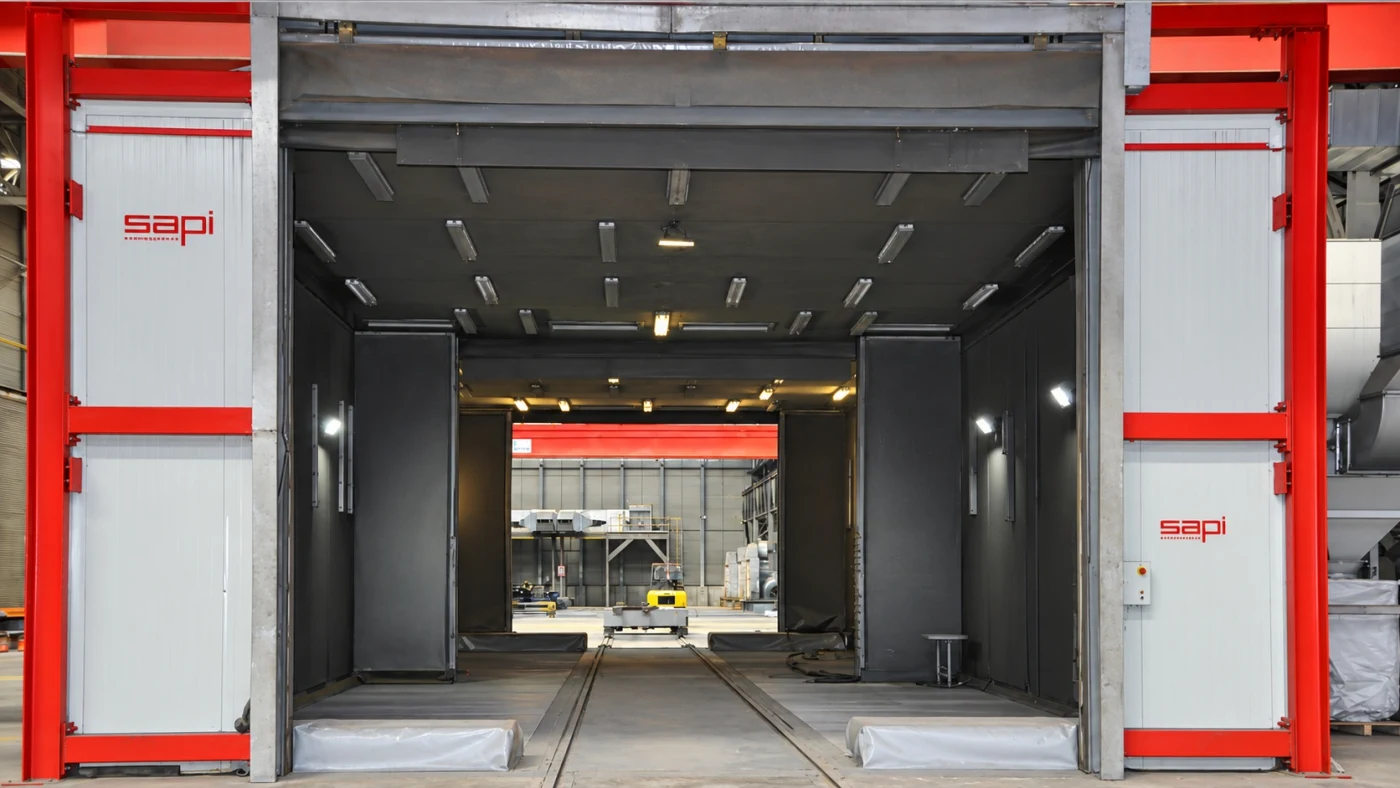
Suitable for the cabin route
- Hulls and welded assemblies that do not fit into the automatic line cross-section
- Fabrications with different geometries, protrusions, or box sections
- Single heavy parts on a project basis
- Fabrications requiring internal surface and hard-to-reach areas
-
Suitable for the automatic line
- Series steel profiles and plates
- Welded parts with repetitive cross-sections
- High-volume fabrications of the same dimensions
- Flat surface elements that fit the line geometry
Degree of cleanliness and surface profile
Surface cleanliness, surface profile, dust control, and pre-paint time management are critical quality parameters.
- Sa 2½ Very good blasting ISO 8501-1
- A high level of cleanliness where mill scale, rust, old coatings, and foreign matter are almost completely removed, leaving only slight traces.
- Sa 3 Visually clean steel ISO 8501-1
- One of the highest levels of visual blasting cleanliness where the surface achieves a homogeneous metallic appearance. Applied when required by project specifications.
- Profile Surface roughness ISO 8503
- Target roughness for paint system adhesion; controlled according to the specifications of the abrasive and paint manufacturer to be used.
The blasted surface is taken into the painting process as soon as possible, protected from dust, moisture, flash rust, and recontamination.
Blasting quality gates
Control is performed and recorded at five points. The part does not proceed to the painting process without surface approval after blasting.
-
01
Pre-surface and dirt control
Oil, grease, weld residue, edge condition, and masking needs are determined before blasting.
-
02
Sa cleanliness degree
The Sa degree requested in the specification is verified with a visual reference.
-
03
Surface profile
The target roughness is measured and compared with the adhesion requirement of the paint system.
-
04
Dust and contamination
The level of dust, salt, and chloride remaining on the surface is checked.
-
05
Pre-paint climate suitability
Air and surface temperature, relative humidity, and dew point are recorded.
Heavy part movement
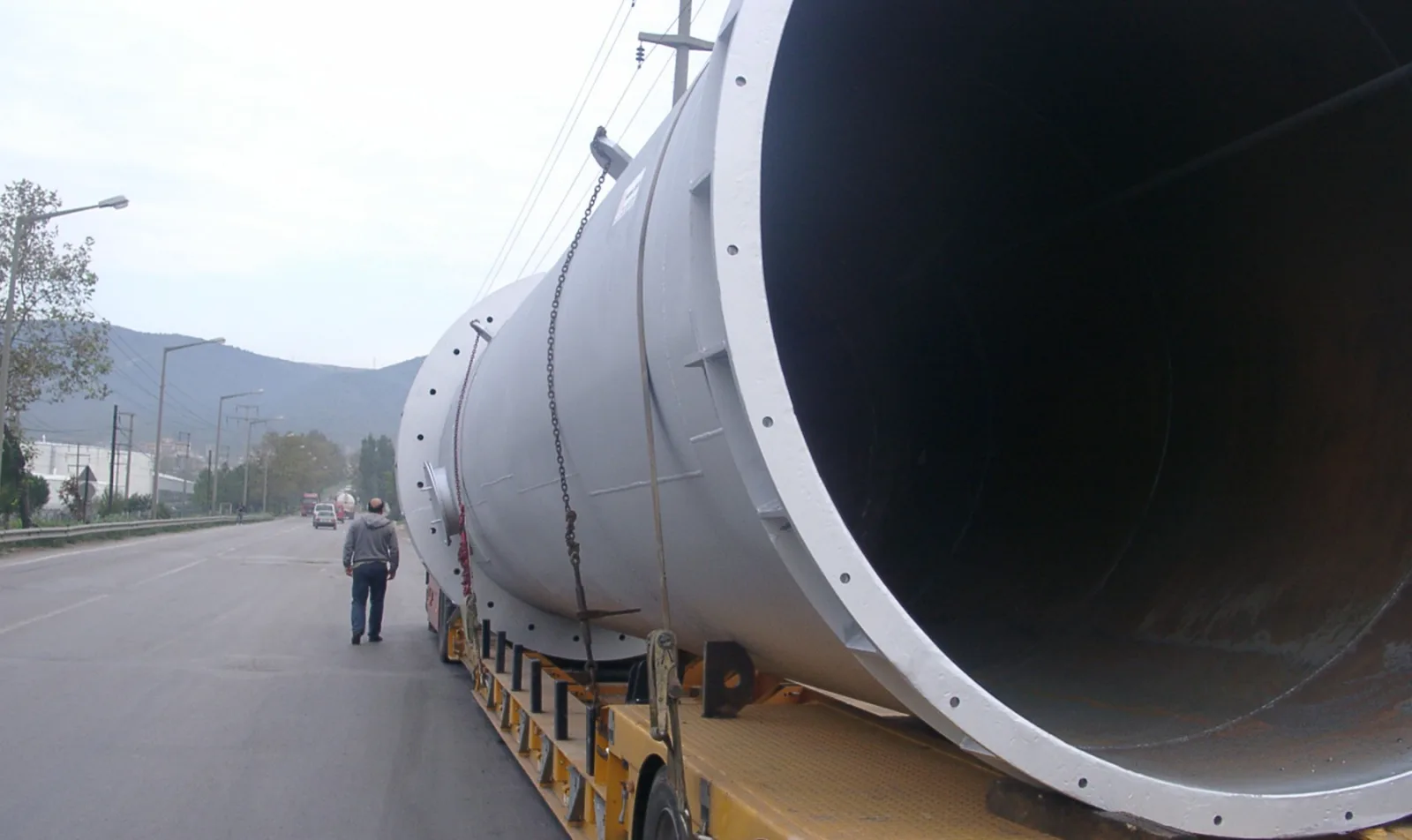
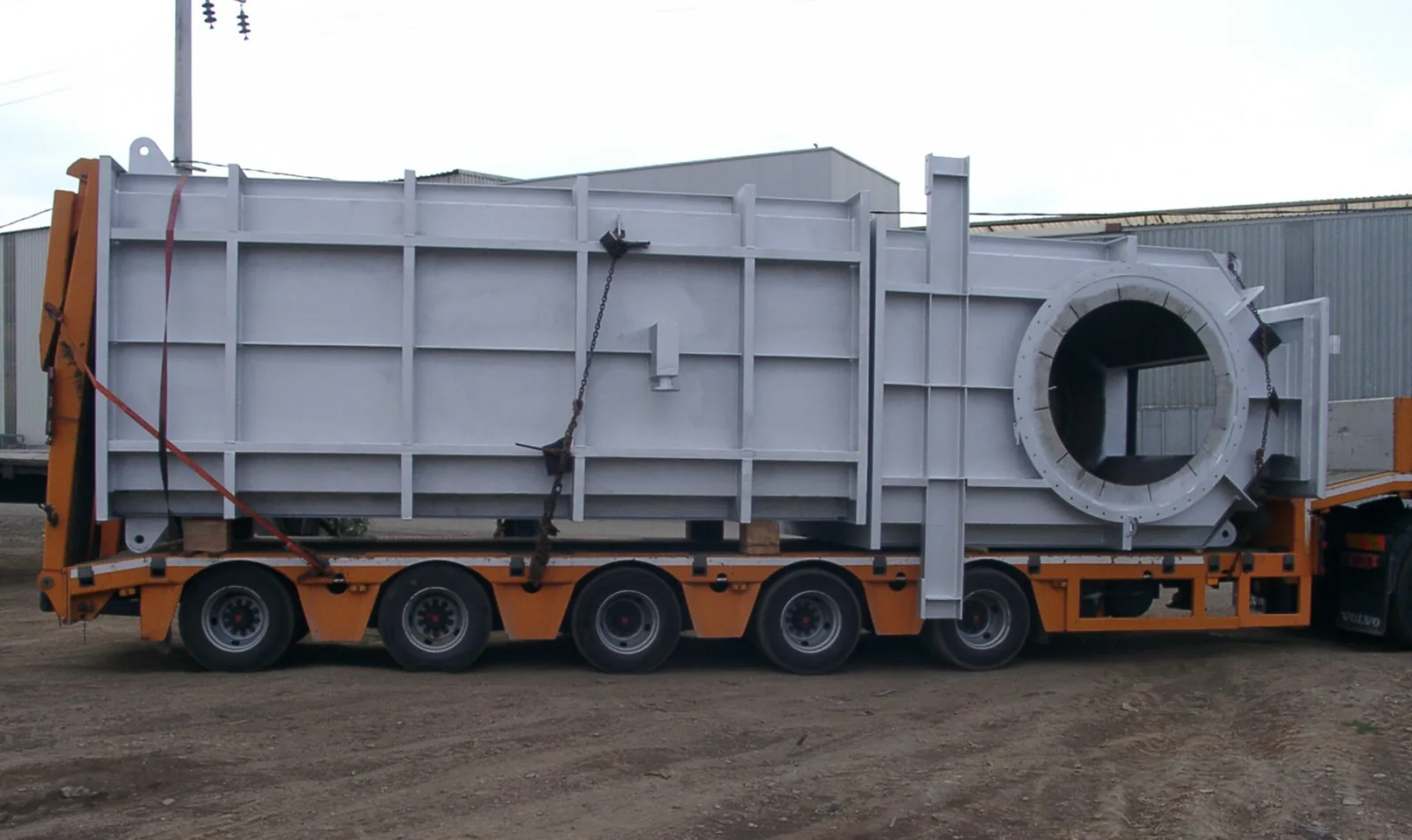
Blasting alone is not sufficient. The safe entry of the part into the booth, its transfer to painting without post-process contamination, and its damage-free shipment are part of the same flow.
- 5,000 m² storage and drying area with overhead cranes and concrete floor
- Vehicle access road along the hall and two separate weighbridges
- Blocking, surface protection, and strapping after complete drying
Frequently asked questions
The most frequently asked questions during the quotation phase. If you cannot find what you are looking for, you can write directly.
The internal dimensions of the booth are 8 meters wide, 26 meters long, and 4.50 meters high. It is equipped with dual nozzles and a manual operator. Parts within this inventory are processed in a single pass without division.
During the quotation phase, we evaluate based on the part list and dimensions. For fabrications exceeding our inventory, we discuss options such as division, segmented processing, or alternative solutions together. Sharing the dimensions will expedite this evaluation.
The automatic OMSG line provides a fast and repeatable flow for serial profiles and plates; it operates as a closed process with abrasive recovery and filtration. The booth, on the other hand, provides flexibility for parts that do not fit the line's cross-section, have protrusions, are box-sectioned, or are single heavy parts on a project basis. Both routes operate with the same quality gates.
The site is laid out to support the safe movement of heavy parts: a 5,000 m² crane-equipped and concrete-floored storage area, a vehicle path extending along the hall, and two separate weighbridges. Before shipment, after complete drying, blocking, surface protection, and spansetting are performed.
Yes. The Sa 2½ and Sa 3 degrees and ISO 8503 surface profile control are the same for both routes. The part does not proceed to the painting process without surface approval after blasting.
The turnaround time is determined during the quotation phase based on the part's dimensions, quantity, desired Sa degree, and paint system. Since the automatic line and the cabin are separate routes, serial jobs and heavy parts on a project basis do not delay each other.
Evaluate your project with our technical team
Once the part information, desired surface preparation, and paint system are clarified, the quote is prepared in one step. You can directly attach your specification file if available.
- Specification and drawing file can be attached
- Unknown technical fields can be left blank
- A reference number will be provided after submission