Skip to content
BER-GRİT

Grit blasting

The performance and service life of industrial paint systems begin with proper surface preparation. Surfaces of steel construction, profiles, plates, pipes, and heavy fabrications are prepared in accordance with project specifications.

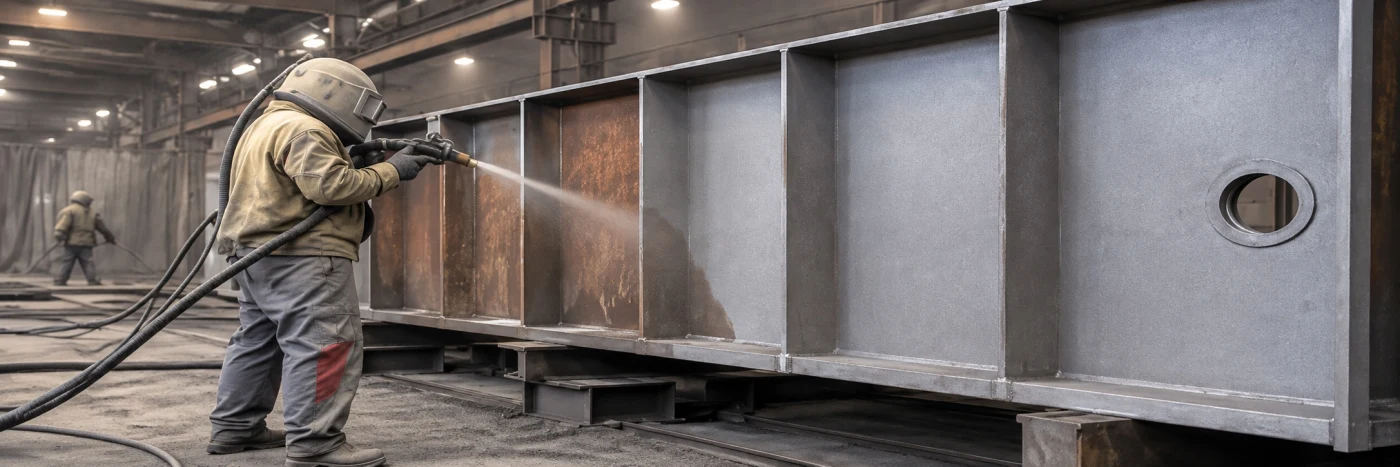
Nozzle blasting of steel fabrication inside the cabin.
Surface preparation in the blasting cabin.

Two blasting routes

The size and geometry of the part, and the surface quality required by the specification determine which route will be used.

OMSG automatic turbine blasting

High-capacity automatic blasting line is used for serial production of profiles, plates, and steel parts with suitable geometry.

  • Sa 2½ or Sa 3 surface cleanliness degrees according to application and project specifications
  • Controlled surface profile
  • High capacity and homogeneous surface quality suitable for mass production
Steel blasting details
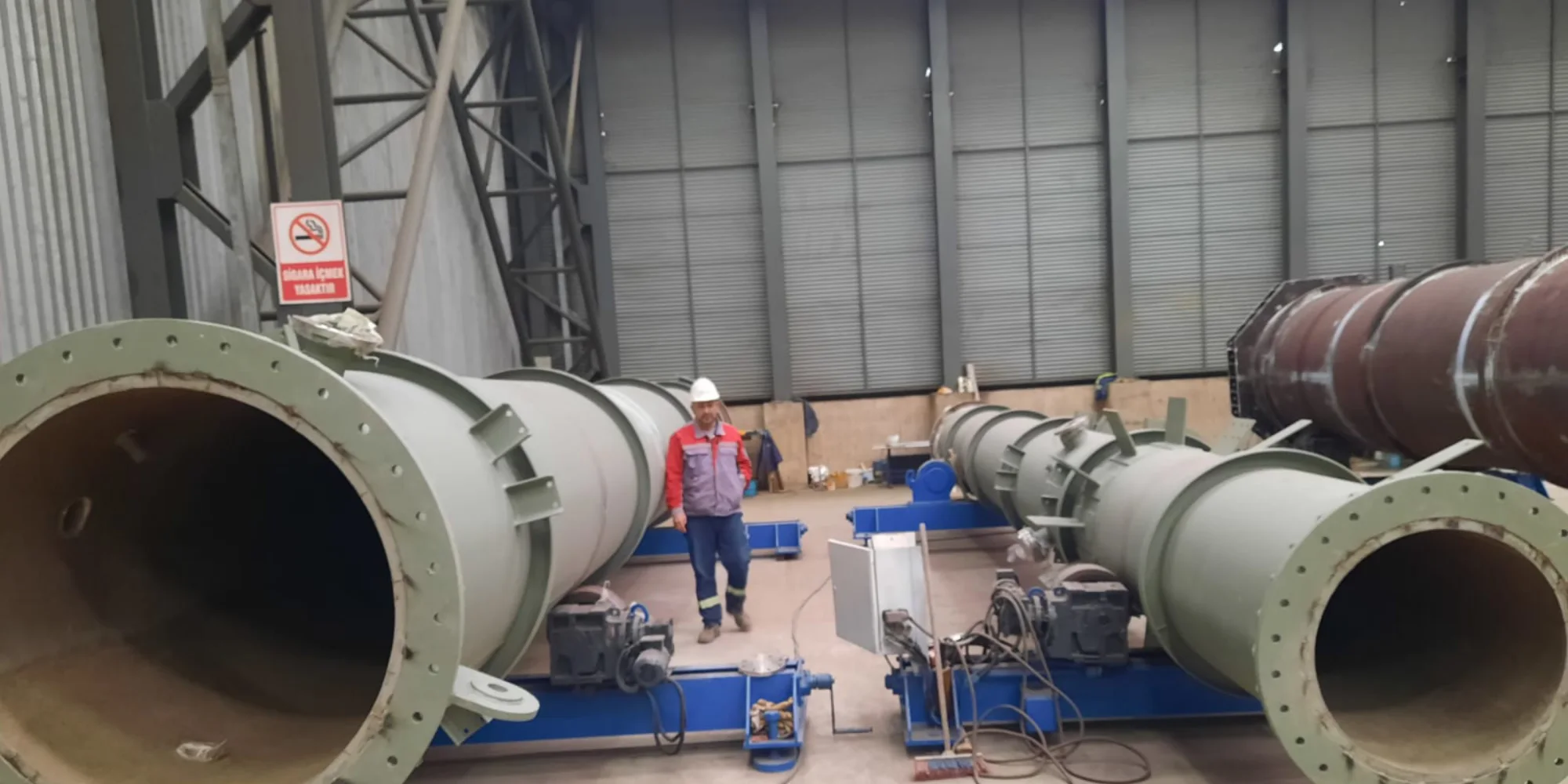
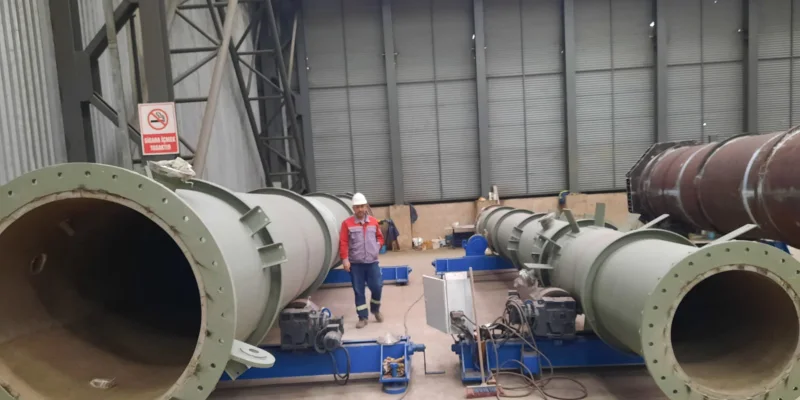
Steel bodies during surface preparation within the facility.
Superior performance in serial production

SAPI large part blasting

Heavy, large, and complex geometrically steel fabrications not suitable for the automatic line are processed in a cabin with an internal length of 26 meters.

  • Heavy steel constructions and large industrial equipment
  • Fabrications with complex geometry
  • Blasting of large parts as much as possible without division
  • Surface cleanliness degree and profile target in accordance with project specifications
Large part blasting details
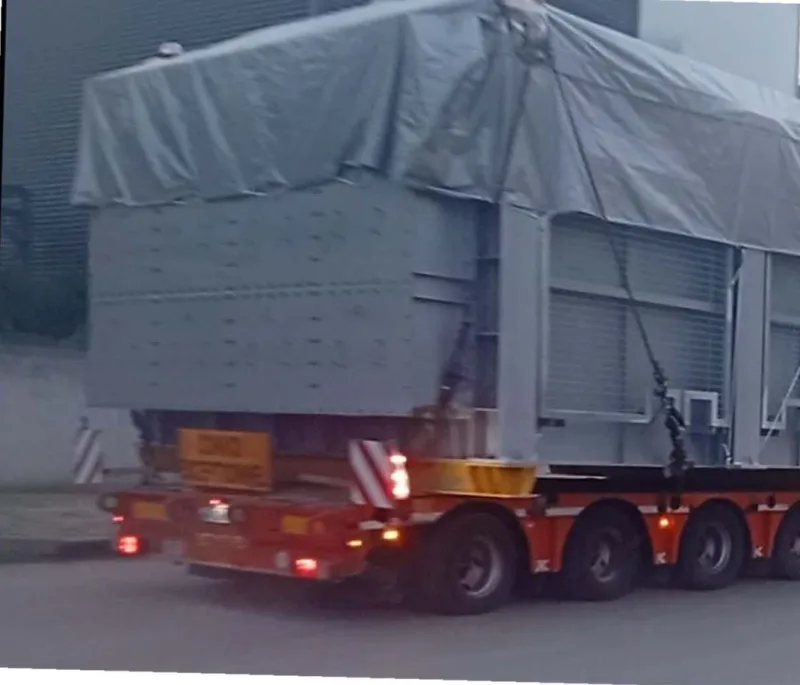
Large volume equipment body that fits within the cabin dimensions.
26 meter blasting cabin

Painting after blasting

The blasted surface re-oxidizes as long as it remains exposed. Therefore, surface preparation and coating are planned in the same facility, on a single flow.

Painting and corrosion protection
ISO 8501-1 cleaning grades
Sa 2½ · Sa 3 ISO 8501-1 cleaning grades
Cabin internal dimensions (m)
8 × 26 × 4,50 Cabin internal dimensions (m)
Enclosed production area (m²)
5.000 Enclosed production area (m²)

Frequently asked questions

The most frequently asked questions during the quotation phase. If you cannot find what you are looking for, you can write directly.

Serial profiles, sheets, pipes, and repeated sections are processed on the automatic turbine line. Parts that do not fit in the automatic line, have protrusions, are box-sectioned, or are single heavy fabrications are processed in the SAPI booth. The decision is made based on the part's dimensions and geometry during the quotation phase.

Sa 2½ and Sa 3 grades are applied within the scope of ISO 8501-1. Which grade is applicable comes from the project specification; if there is no specification, the grade required by the paint system is recommended.

No. The SAPI booth has internal dimensions of 8 × 26 × 4.50 m; as long as the part fits within these dimensions, it is not divided due to line restrictions. The decision to divide comes solely from the customer's own production and transportation plan.

The sandblasted surface re-oxidizes as it remains exposed. Therefore, sandblasting and painting are planned at the same facility, on a one-way flow; the waiting time is kept short according to climatic conditions and is recorded.

Yes. Surface preparation only requests are accommodated. However, as the waiting time for a sandblasted surface is critical, performing sandblasting and painting at the same facility offers an advantage in terms of quality.

Let's determine together which route is suitable for your part

When the part size, geometry, and specification, if any, are communicated, the appropriate route, cleaning grade, and termination are evaluated by our technical team.

Example: 40 tons of steel construction, Sa 2½ blasting, zinc epoxy primer and polyurethane topcoat, total 240 µm.

  • Specification and drawing file can be attached
  • Unknown technical fields can be left blank
  • A reference number will be provided after submission